Dental Sealants for Molars: How They Protect the Grooves of Back Teeth
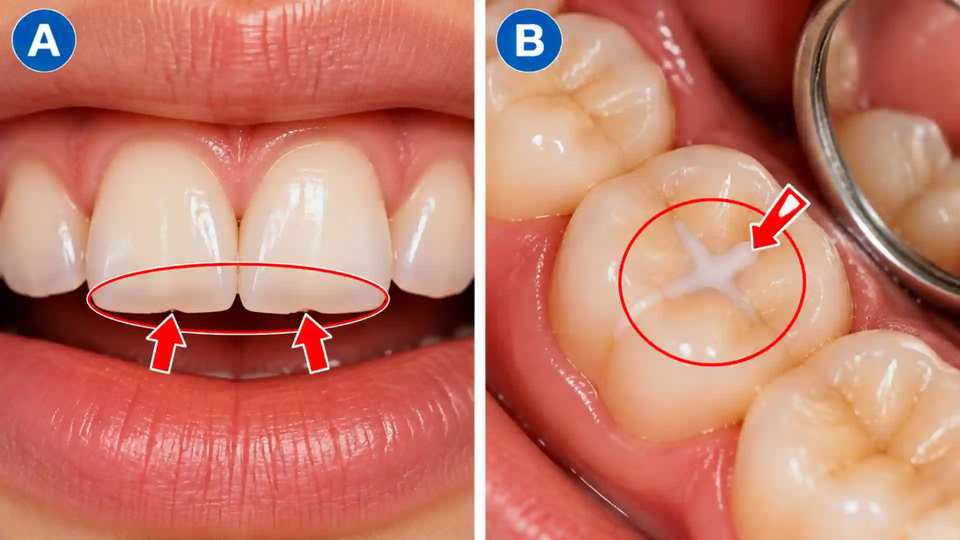
The correct quiz answer is B: Grooves of back teeth. Dental sealants are thin protective coatings applied to the pits and grooves on the chewing surfaces of molars. They create a barrier that helps keep food particles and cavity-causing bacteria away from these vulnerable areas.
Key Takeaways:
Dental sealants are commonly applied to the pits and grooves of back teeth.
Molars have complex chewing surfaces that can be difficult to clean thoroughly.
Sealants help prevent cavities by protecting susceptible tooth surfaces.
First permanent molars usually erupt around ages 6–7, while second permanent molars typically appear around ages 11–13.
Children are common candidates, but selected adults and primary molars may also benefit.
Sealants do not replace fluoride toothpaste, daily brushing, cleaning between teeth, or regular dental checkups.
A dentist evaluates tooth condition, eruption stage, and cavity risk before recommending sealants.
This guide explains where dental sealants are placed, how they work, who may benefit, how long protection lasts, and what to know about costs and insurance.
Medical information notice: This article provides general educational information and does not replace individualized examination, diagnosis, or treatment from a licensed dental professional.
Quiz Answer: Where Are Dental Sealants Commonly Applied?
Grooves of back teeth is the correct answer. Dental sealants are commonly placed on the chewing surfaces of molars, where small pits and narrow grooves can retain plaque and food debris.
The front edges of teeth are not the usual placement area for dental sealants. The primary purpose of a sealant is to protect susceptible chewing surfaces rather than cover every part of a tooth.
Sealants are a preventive treatment. A dentist examines the tooth and determines whether its grooves, condition, and cavity risk make sealing appropriate.
What Are Dental Sealants, and How Do They Protect Molars?
Dental sealants are thin coatings placed on the chewing surfaces of back teeth. The material flows into pits and fissures, which are the small depressions and narrow grooves found on molars, and forms a protective barrier over these areas.
Molars help crush and grind food, but their complex chewing surfaces can be difficult to clean thoroughly. Toothbrush bristles may not reach every narrow groove, particularly when the grooves are deep or difficult to access.
Dental plaque is a sticky film of bacteria that forms on teeth. When certain bacteria break down sugars and other fermentable carbohydrates, they produce acids that remove minerals from enamel. Repeated acid exposure can eventually lead to a cavity.
Sealants help reduce this risk by covering susceptible chewing surfaces. They protect selected areas rather than the entire tooth, so daily oral hygiene and routine dental care remain important.
Reference: American Dental Association, Dental Sealants: https://www.ada.org/resources/ada-library/oral-health-topics/dental-sealants/.
Which Parts of the Teeth Are Usually Sealed?
Dental sealants are most commonly applied to the pits and fissures on the chewing surfaces of molars. These grooves can be narrow and deep enough to make thorough cleaning difficult.
The first and second permanent molars are common candidates because their chewing surfaces may retain plaque. First permanent molars usually erupt around ages 6–7, and second permanent molars typically appear around ages 11–13, although timing varies.
Sealants are not routinely intended for the front edges of teeth. Their purpose is to protect susceptible chewing surfaces rather than cover all tooth surfaces.
A dentist assesses the depth of the grooves, the presence of decay, the stage of eruption, and the patient's cavity risk before deciding whether a sealant is appropriate.
Which Teeth Benefit Most From Dental Sealants?
Permanent molars are the most common targets for dental sealants, particularly the first and second permanent molars. Their chewing surfaces contain pits and fissures that can retain plaque.
Primary molars may also benefit in selected children, especially when the teeth have deep grooves or the child has an elevated risk of decay. A pediatric dentist can assess the tooth's condition and how long it is expected to remain in the mouth.
Adults with deep molar grooves, a history of cavities, or other factors that increase cavity risk may also be candidates. However, the decision should be individualized because the evidence supporting routine sealant use is more extensive in children and adolescents.
Sealants are not automatically necessary for every molar. Teeth with established cavities or extensive restorations may require restorative or other treatment instead of a sealant alone.
Are Dental Sealants Only for Children?
Dental sealants are commonly associated with children because their permanent molars erupt during school-age years, when preventive protection can be especially useful.
First permanent molars usually erupt around ages 6–7, and second permanent molars typically appear around ages 11–13. A dentist can evaluate these teeth soon after eruption to determine whether sealing is appropriate.
Adults may also benefit if they have deep molar grooves, a history of cavities, or an elevated risk of tooth decay. However, sealants protect selected chewing surfaces and do not replace treatment for established cavities or protect every surface of a tooth.
The decision should account for tooth anatomy, existing decay, previous cavities, oral hygiene, and individual risk factors. A dental professional can explain the expected benefit and available alternatives.
How Effective Are Dental Sealants at Preventing Cavities?
Dental sealants have strong evidence supporting their use to prevent cavities in the pits and fissures of children's permanent molars.
The Centers for Disease Control and Prevention (CDC) reports that sealants can prevent up to 80% of cavities in back teeth during the first two years after placement and continue protecting against about 50% of cavities for up to four years. The CDC also reports that school-age children without sealants have nearly three times as many cavities in their first molars as children with sealants.
These figures describe population-level findings, not guaranteed outcomes for an individual patient. Actual protection depends on tooth condition, placement quality, whether the coating remains intact, and the person's ongoing cavity risk.
Sealants work best as part of a broader prevention plan that includes fluoride toothpaste, effective brushing, appropriate dietary habits, and regular dental examinations.
References:
CDC — About Dental Sealants: https://www.cdc.gov/oral-health/prevention/about-dental-sealants.html
CDC — Dental Sealant Facts: https://www.cdc.gov/oral-health/data-research/facts-stats/fast-facts-dental-sealants.html
How Are Dental Sealants Applied?
Sealant placement is generally straightforward and does not require drilling or anesthesia when the tooth is suitable for treatment. The exact procedure depends on the tooth's condition and the material being used.
First, the dentist examines the molar for deep grooves, visible decay, existing fillings, and other conditions that could affect treatment. The chewing surface is cleaned to remove plaque and debris.
Next, the tooth is isolated and dried. Moisture control matters because contamination can interfere with the sealant's ability to bond and remain in place. Many resin-based sealants require an enamel-conditioning step before the material is applied.
The dentist places the sealant over the pits and fissures, allowing it to flow into the grooves. Depending on the material, it may be set with a curing light. The dentist then checks the coverage, retention, and bite.
If a molar is only partially erupted and cannot be isolated adequately, the dentist may recommend monitoring it and placing the sealant when conditions are suitable.
What Types of Dental Sealants Are Available?
Dental sealants are made from different materials, mainly resin-based materials and glass ionomer-based materials. Each has different handling and retention characteristics.
Resin-based sealants are commonly used when the tooth surface can be kept sufficiently dry during placement. They can provide strong retention on suitable surfaces.
Glass ionomer sealants may be useful when moisture control is more challenging, and some formulations release fluoride. Resin-modified glass ionomer materials combine characteristics of glass ionomer and resin-based materials.
No single material is universally best for every clinical situation. The dentist selects an appropriate product based on the tooth, moisture-control conditions, and the manufacturer's instructions.
Patients can ask whether the tooth is suitable for sealing, which material is recommended, and how the coating will be checked over time.
How Long Do Dental Sealants Last?
Dental sealants can remain protective for several years, but their lifespan varies. Some coatings remain intact for a long time, while others may wear, chip, or lose coverage sooner.
The condition of the sealant matters more than simply counting the years since placement. An intact coating may continue protecting the covered grooves, while a damaged or partially missing coating may need repair or replacement.
Routine dental examinations allow the dentist to check whether the sealant still covers the intended surface. If part of the coating has worn away, the dentist can determine whether repair or reapplication is appropriate.
A chipped or missing sealant does not automatically mean the tooth has developed a cavity. However, the affected surface should be assessed to determine whether protection needs to be restored. Do not try to repair a sealant at home with household adhesives or other products.
What Are the Limitations of Dental Sealants?
Dental sealants protect selected chewing surfaces rather than the entire tooth. Cavities can still develop between teeth, along the gumline, or in areas that are not covered by the coating.
Sealants can also wear or lose retention. Their condition should be checked during routine dental visits, and damaged coverage may require repair or replacement.
An established cavity may require treatment beyond a sealant. Certain early, noncavitated lesions may be suitable for sealing when a dentist determines that the approach is appropriate, but a visible hole or more advanced decay requires an individualized assessment.
Sealants do not replace fillings, treatment for established decay, or professional care for gum disease. Persistent tooth pain, gum swelling, or bleeding should be assessed by a dental professional.
Are Dental Sealants Safe?
Dental sealants have a long history of use in preventive dentistry. The material selected should be appropriate for the patient and used according to professional guidance and manufacturer instructions.
According to the American Dental Association, resin-based dental materials may cause a small, temporary increase in bisphenol A (BPA) exposure after placement. The ADA states that current evidence does not indicate a health concern from the low BPA exposure associated with dental sealants.
Patients with concerns about specific materials can discuss available options with a dentist. The choice should account for the tooth's condition, the clinical circumstances, and the characteristics of the sealant material.
Sealants work best as one part of a broader cavity-prevention plan rather than as a guarantee that cavities will never occur.
Reference: American Dental Association, Dental Sealants: https://www.ada.org/resources/ada-library/oral-health-topics/dental-sealants/.
How Much Do Dental Sealants Cost, and Does Insurance Cover Them?
The cost of dental sealants varies by provider, location, and the number of teeth treated. A U.S. cost study cited by CareCredit in June 2024 reported an estimated range of $33–$82 per tooth, with an average cost of $42 per tooth.
Using that reference range, sealing four molars would cost approximately $132–$328 for the sealants alone. At the reported average of $42 per tooth, four sealants would total approximately $168. These figures are dated reference estimates, not guaranteed current prices or quotes from a particular dental office.
Ask whether the estimate includes only the sealants or also covers an examination, X-rays, or other services. Additional services may be billed separately.
Many dental plans cover sealants for eligible children, but coverage varies. Age limits, eligible teeth, frequency restrictions, network status, deductibles, copayments, and coinsurance may affect out-of-pocket costs.
Before treatment, ask the insurer and dental office to confirm which teeth are eligible, whether the dentist is in network, whether frequency limits apply, and whether the examination or X-rays are billed separately. Families without private dental insurance can explore community clinics, dental schools, and school-based sealant programs. Eligible children may receive sealants through Medicaid or the Children's Health Insurance Program (CHIP), depending on program rules and state arrangements.
Reference: CareCredit — What Are Dental Sealants and How Do They Work?: https://www.carecredit.com/well-u/health-wellness/what-are-dental-sealants/.
How Can You Get the Most From Dental Sealants?
Dental sealants work best when combined with consistent daily oral care and regular dental appointments.
Brush twice daily with fluoride toothpaste, paying particular attention to the chewing surfaces of molars. Clean between teeth every day with dental floss or another suitable interdental cleaner.
Limit frequent exposure to sugary foods and drinks, and choose water between meals when possible. These habits help reduce repeated acid exposure and support oral health.
Keep routine dental appointments so the dentist can check sealant retention and determine whether additional preventive measures are appropriate. If a sealant chips or falls off, contact the dental office rather than attempting a home repair.
Sealants protect specific grooves, while fluoride toothpaste and daily plaque removal help protect oral health more broadly.
Common Mistakes to Avoid With Dental Sealants
Assuming sealants belong on the front edges of teeth: Sealants are commonly applied to the pits and grooves on the chewing surfaces of back teeth.
Assuming every molar needs a sealant: Deep grooves, existing decay, eruption stage, and individual cavity risk affect whether treatment is appropriate.
Assuming sealants replace fluoride toothpaste: Sealants protect selected grooves, while fluoride helps protect enamel more broadly.
Waiting until a cavity appears: Sealants are primarily preventive, so discuss them when susceptible molars are suitable for treatment rather than waiting for pain.
Assuming sealants last forever: Coatings can wear or lose retention and should be checked during routine dental examinations.
Assuming sealants treat every type of decay: A sealant may be appropriate for certain early, noncavitated lesions, but an established cavity may require restorative treatment.
Frequently Asked Questions About Dental Sealants
Where are dental sealants commonly applied?
Dental sealants are commonly applied to the pits and grooves on the chewing surfaces of molars, where food particles and plaque can accumulate.
Are dental sealants applied to the front edges of teeth?
That is not the usual placement area. Sealants are primarily intended to protect susceptible chewing surfaces of back teeth.
At what age are dental sealants commonly considered?
They are often considered after the first permanent molars erupt around ages 6–7. Second permanent molars typically appear around ages 11–13, although timing varies. A dentist determines when each tooth is ready for treatment.
Can adults get dental sealants?
Yes. Adults with deep molar grooves or elevated cavity risk may be candidates. Suitability depends on tooth condition and individual circumstances.
Do dental sealants hurt?
Placement is generally comfortable and does not require drilling or anesthesia when the tooth is suitable for treatment.
How long do dental sealants last?
They can remain protective for several years, but wear and loss of retention can occur. A dentist should check them during routine examinations.
Do sealants replace brushing with fluoride toothpaste?
No. Sealants protect selected chewing surfaces and should be combined with fluoride toothpaste, daily brushing, cleaning between teeth, and regular dental care.
Can sealants be placed over a cavity?
Certain early, noncavitated lesions may be suitable for sealing after a dentist's assessment. A cavity that has progressed to a hole or caused more extensive damage may require restorative treatment.
Does dental insurance cover sealants?
Many plans cover sealants for eligible children, but coverage varies. Confirm benefits, eligible teeth, age limits, frequency restrictions, and possible out-of-pocket costs with the insurer and dental office.
Sources
- Centers for Disease Control and Prevention (CDC). About Dental Sealants. https://www.cdc.gov/oral-health/prevention/about-dental-sealants.html
- CDC. Dental Sealant Facts. https://www.cdc.gov/oral-health/data-research/facts-stats/fast-facts-dental-sealants.html
- American Dental Association (ADA). Dental Sealants. https://www.ada.org/resources/ada-library/oral-health-topics/dental-sealants/
- American Academy of Pediatric Dentistry (AAPD). Evidence-Based Clinical Practice Guideline for the Use of Pit-and-Fissure Sealants. https://www.aapd.org/research/oral-health-policies--recommendations/pit_and_fissure_sealants/
- National Institute of Dental and Craniofacial Research (NIDCR). The Tooth Decay Process. https://www.nidcr.nih.gov/health-info/tooth-decay/more-info/tooth-decay-process
- CareCredit. What Are Dental Sealants and How Do They Work? https://www.carecredit.com/well-u/health-wellness/what-are-dental-sealants/
- InsureKidsNow.gov. Find a Dentist. https://www.insurekidsnow.gov/find-a-dentist