Cracked Tooth: What to Do First and When to See an Emergency Dentist
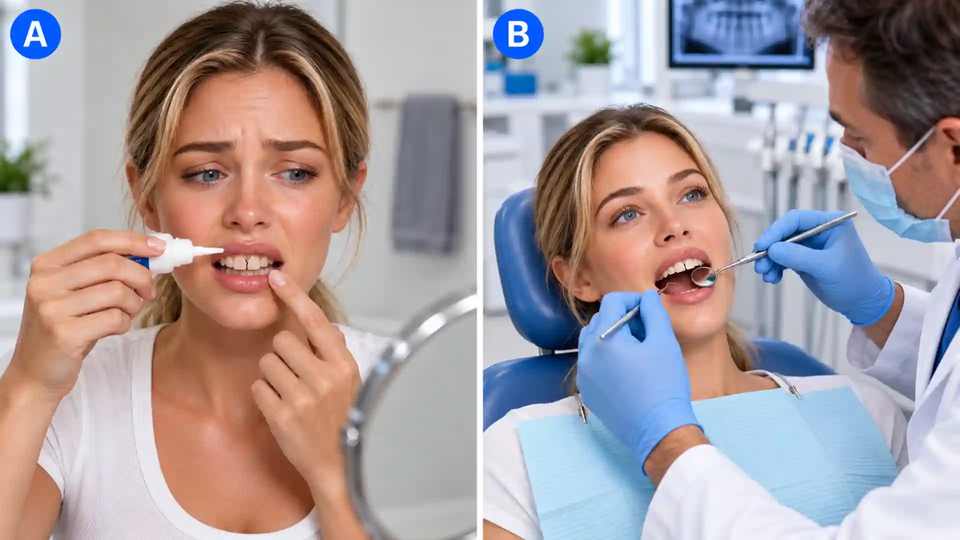
The correct quiz answer is B: See a dentist promptly. If you crack a tooth, rinse your mouth gently with warm water, avoid chewing on the affected side, and contact a dentist as soon as possible. A small chip may need a simple repair, while a deeper crack can require a crown, root canal treatment, or extraction. Severe pain, swelling, uncontrolled bleeding, or facial trauma requires more urgent attention.
Key Takeaways:
A cracked tooth needs professional assessment because a fracture may extend deeper than it appears, even when pain is mild or absent.
Protect the tooth immediately by rinsing gently, avoiding chewing on the damaged side, and using a cold compress if swelling develops.
Severe pain, persistent bleeding, swelling, or signs of infection may require emergency dental care.
Treatment depends on the crack and may involve bonding, fillings, crowns, root canal treatment, or extraction.
Never use household glue, household tools, or improvised materials to repair a cracked tooth.
Cracked tooth repair costs vary according to the damage, required treatment, geographic location, and insurance benefits.
This guide explains immediate first aid, warning signs, how dentists diagnose fractures, available treatment options, and financial considerations.
Medical information notice: This article provides general educational information and does not replace individualized diagnosis or treatment from a licensed dental professional.
Quiz Answer: What Should You Do if You Crack a Tooth?
Seeing a dentist promptly is the correct answer. Even when a cracked tooth causes little or no pain, a fracture may involve deeper tooth structures that cannot be evaluated reliably at home.
Household glue is not a safe solution. Adhesives may irritate oral tissues, contaminate the affected area, and complicate professional repair. A cracked tooth should be assessed before choosing an appropriate restoration.
While arranging dental care, rinse gently with warm water, avoid biting on the damaged tooth, and choose soft foods. If swelling develops, apply a cold compress to the outside of the cheek.
Seek urgent dental assessment for significant pain, swelling, or suspected infection. Serious facial trauma, uncontrolled bleeding, or difficulty breathing or swallowing requires emergency medical attention.
What Should You Do Immediately After Cracking a Tooth?
The first priority is to protect the damaged tooth and surrounding tissues until a dentist can examine it. Home care may reduce discomfort, but it cannot repair the underlying fracture.
Step 1: Rinse your mouth gently with warm water to remove food particles or debris. Avoid aggressive rinsing, especially after an injury.
Step 2: Check for bleeding. If the surrounding gums or soft tissues are bleeding, apply gentle pressure with clean gauze. Seek urgent care if bleeding is heavy or does not stop.
Step 3: Protect the affected tooth. Avoid chewing on the damaged side and choose soft foods. Avoid hard, crunchy, or sticky foods that could place additional pressure on the fracture.
Step 4: Apply a cold compress if swelling develops. Hold it against the outside of the cheek rather than placing ice directly on an exposed or painful tooth.
Step 5: Save any broken tooth fragment. Place it in milk or saliva in a suitable container and bring it to the dental appointment. The dentist can determine whether reattachment is possible.
Step 6: Contact a dentist promptly. Explain what happened and mention pain, sensitivity, bleeding, swelling, or a visible break.
Do not attempt to repair the tooth using household glue, tools, or other improvised materials.
When Should You See an Emergency Dentist for a Cracked Tooth?
A cracked tooth generally deserves timely dental evaluation, but not every crack requires a hospital emergency department. The urgency depends on pain, swelling, bleeding, trauma, and whether the tooth appears structurally unstable.
Fine surface line without pain or injury: Arrange a dental examination to determine whether it is a superficial enamel line.
Small chip without significant pain: Contact a dentist promptly because the damaged surface may need smoothing or repair.
Pain when biting or releasing pressure: Request a prompt dental appointment because this can indicate a deeper fracture.
Persistent temperature sensitivity or spontaneous tooth pain: Seek urgent dental assessment because the pulp may be irritated or damaged.
Severe pain, worsening swelling, or suspected dental infection: Seek same-day urgent dental care when available.
Uncontrolled bleeding, difficulty breathing or swallowing, or major facial trauma: Seek emergency medical attention immediately.
If a dentist is unavailable and the injury or infection appears serious, seek appropriate urgent medical care rather than delaying assessment.
What Are the Most Common Cracked Tooth Symptoms?
Cracked tooth symptoms vary according to the location and depth of the fracture. Some cracks cause no discomfort, while others produce intermittent or persistent pain.
Pain when biting or releasing pressure is a characteristic symptom. A crack may allow small portions of a tooth to move during chewing, irritating tissues inside the tooth.
Sensitivity to hot or cold foods and drinks may also occur. However, sensitivity can have other causes, including cavities and gum recession, so a dentist must determine whether a fracture is responsible.
Some people experience spontaneous discomfort that disappears and returns without an obvious pattern. Others develop persistent pain as the pulp becomes inflamed or infected.
A crack may also be visible without causing symptoms. The absence of pain does not reliably establish how deep the damage extends.
What Types of Tooth Cracks Are There?
Not every visible line represents the same type of tooth damage. Dentists classify fractures according to their location, direction, and extent.
Craze lines: Very shallow lines limited to the outer enamel. These usually require monitoring rather than extensive treatment.
Fractured cusp: Part of the chewing surface breaks, often near an existing filling. Treatment may involve a filling, onlay, or crown.
Cracked tooth: A fracture extends from the crown toward the root. A crown may be needed, and root canal treatment may be necessary if the pulp is affected.
Split tooth: The tooth has separated into distinct segments. Extraction or selected treatment to preserve part of the tooth may be considered.
Vertical root fracture: A fracture begins within the root. Specialist evaluation is often necessary, and extraction may be required.
Some cracks can extend under repeated chewing pressure, but superficial craze lines are different from structural fractures. A dentist must evaluate the individual crack before recommending treatment.
How Does a Dentist Diagnose a Cracked Tooth?
A dentist diagnoses a cracked tooth by combining symptoms, clinical examination, and appropriate diagnostic tests.
The examination may include reviewing when pain began, asking about recent injuries, checking for visible cracks or damaged restorations, and performing controlled biting tests to identify pain associated with a particular cusp.
The dentist may evaluate sensitivity to temperature, examine the surrounding gums, and take dental X-rays when appropriate.
X-rays help assess the roots, supporting bone, and other possible causes of pain. However, not every tooth crack is visible on a standard X-ray.
Magnification, transillumination, or other examination methods may help identify difficult fractures. If the diagnosis remains uncertain, referral to an endodontist may be appropriate.
An endodontist is a dentist who specializes in conditions affecting the dental pulp and root canal system.
Which Cracked Tooth Treatment Is Best?
The appropriate treatment depends on the amount of healthy tooth structure remaining, whether the dental pulp is affected, and how far the fracture extends.
Dental bonding: Tooth-colored composite resin may repair small chips or selected minor defects when enough healthy tooth structure remains.
Dental filling: A filling may restore a damaged area, depending on the fracture and any existing decay.
Dental crown: A crown covers the prepared tooth to restore function and help protect weakened structure. It may be recommended for larger fractures or cracks involving chewing surfaces.
Root canal treatment: If a crack has affected the pulp and the tooth can still be preserved, root canal treatment may be necessary. A crown is often recommended afterward for a structurally weakened back tooth.
Tooth extraction: Extraction may be required when the fracture extends into an area that cannot be predictably restored or when the tooth has separated into unsalvageable segments.
Not every crack extending toward the root automatically requires extraction. The dentist or endodontist evaluates whether the tooth can be preserved and explains the available options.
Is Dental Bonding or a Crown Better for a Cracked Tooth?
Neither treatment is universally better. Bonding is generally suited to relatively minor damage, while a crown may be more appropriate when the tooth requires additional structural protection.
Dental bonding usually involves less tooth preparation and may be suitable for small chips or selected superficial defects. However, bonding may not provide adequate protection for a deeper structural fracture.
A dental crown typically requires more preparation and covers more tooth structure. It can protect a weakened tooth during chewing, although it cannot guarantee that an underlying crack will stop progressing.
Cost and treatment complexity also differ. Straightforward bonding is generally less expensive than a crown, but choosing the least expensive procedure is not necessarily appropriate when the fracture requires more extensive protection.
A dentist should assess the crack before recommending one option.
How Much Does Cracked Tooth Repair Cost?
Cracked tooth repair costs depend on the type of fracture, tooth location, materials, provider, and treatment required. There is no single price for every cracked tooth.
CareCredit published U.S. procedure cost information in 2024 based on the Synchrony Average Procedural Cost Study. These are historical national references rather than current 2026 treatment quotes.
Dental bonding, per tooth: Reported average $431; published range $288–$915.
Composite filling: Reported average $226; published range $173–$439.
Porcelain crown: Reported average $1,399; published range $915–$3,254.
Porcelain-and-metal crown: Reported average $1,114; published range $770–$2,454.
Molar root canal: Reported average $1,337; published range $1,030–$2,471.
Simple tooth extraction: Reported average $177; published range $137–$335.
For illustration, adding the historical average molar root canal cost of $1,337 and porcelain crown cost of $1,399 produces $2,736 before possible examination fees, X-rays, buildup procedures, or other services. This is not an individualized treatment estimate.
Actual dental office fees and insurance benefits may differ. Request an itemized estimate after the tooth has been examined.
Does Dental Insurance Cover Cracked Tooth Repair?
Dental insurance may cover some cracked tooth treatments when they are clinically necessary, but benefits depend on the individual plan.
Fillings, crowns, root canal treatment, and extractions may be classified differently. Coverage can also depend on deductibles, annual maximums, waiting periods, network restrictions, and replacement limitations.
Before planned treatment, ask whether the emergency examination is covered, whether the recommended procedure qualifies for benefits, whether X-rays or specialist consultations are billed separately, and whether a crown requires prior authorization.
Request an estimate of the expected out-of-pocket cost after applicable insurance adjustments.
For urgent symptoms, discuss the need for prompt treatment rather than delaying evaluation solely because insurance information is incomplete.
What Can You Do While Waiting for the Dental Appointment?
Until a dentist examines the tooth, focus on minimizing additional damage and managing discomfort safely.
Avoid chewing directly on the affected tooth. Choose softer foods, avoid extreme temperatures if they trigger sensitivity, and continue gentle cleaning around the damaged area.
For temporary pain relief, over-the-counter medicines such as ibuprofen or acetaminophen may be appropriate for some people when used according to the product label and individual medical guidance.
Pain medication may temporarily relieve discomfort, but it cannot repair a cracked tooth or prevent a structural fracture from progressing.
Do not place aspirin directly on the tooth or gums, use household glue, or attempt to file down a broken tooth.
Antibiotics are not a routine repair for a cracked tooth. They do not restore fractured enamel or dentin, and the need for antibiotics depends on the presence of an infection and professional assessment.
Can a Cracked Tooth Cause Gum Problems?
A deep fracture can sometimes allow bacteria to affect tissues around the root, potentially causing localized inflammation or infection.
However, a structural tooth fracture is different from ordinary gum disease. Treatments designed to remove plaque and tartar do not repair a cracked tooth.
A dentist may examine gum tissues and measure periodontal pockets when evaluating a suspected root fracture. An unusually deep, isolated periodontal pocket can sometimes provide a clue to the underlying problem.
Persistent swelling, tenderness, drainage, or other signs of infection should be assessed promptly. The appropriate treatment depends on the fracture, periodontal findings, and overall tooth condition.
How Can You Reduce the Risk of Cracking Another Tooth?
Not every tooth fracture can be prevented, but reducing excessive forces on the teeth may help.
Avoid chewing ice, hard candy, unpopped popcorn kernels, and other unusually hard objects. Do not use your teeth to open packages or hold tools.
If you grind or clench your teeth, ask a dentist whether a professionally evaluated night guard is appropriate.
Wear a properly fitted sports mouthguard during activities involving a meaningful risk of facial impact.
Maintain regular oral hygiene and dental examinations so that cavities, damaged fillings, and other problems can be identified before they contribute to more extensive tooth damage.
Common Mistakes to Avoid
Waiting for severe pain: Some fractures cause intermittent symptoms or no discomfort at first. Pain alone cannot establish the extent of damage.
Using household glue: Household adhesives are not appropriate for repairing dental fractures and may cause additional complications.
Chewing normally on a damaged tooth: Continued pressure may worsen some structural cracks.
Assuming a crown guarantees success: The outcome depends on the fracture's location, depth, and remaining healthy tooth structure.
Confusing a cracked tooth with a knocked-out tooth: A completely displaced permanent tooth requires different emergency first aid and immediate dental assessment.
Frequently Asked Questions About Cracked Teeth
What should you do if you crack a tooth?
Rinse your mouth gently with warm water, avoid chewing on the damaged side, and contact a dentist promptly. Never use household glue to repair the tooth.
Can a cracked tooth heal on its own?
No. Unlike bone, a cracked tooth cannot naturally repair its fractured structure. Some superficial enamel lines need monitoring only, but deeper cracks may require treatment.
Can a cracked tooth be saved without a crown?
Sometimes. Minor chips and selected superficial defects may be treated with bonding, a filling, or another conservative restoration. A structurally weakened tooth may need a crown.
Is a cracked tooth an emergency if it does not hurt?
Not always an immediate emergency, but it should still be evaluated. A painless crack may be superficial or may involve deeper damage that has not yet caused symptoms.
Can dental X-rays detect every cracked tooth?
No. Some fractures are too small or oriented in ways that make them difficult to see on standard X-rays. Dentists may use additional examination methods.
Will I need a root canal for a cracked tooth?
Not necessarily. Root canal treatment is considered when the pulp is damaged or diseased and the tooth is otherwise suitable for preservation. Many minor fractures do not require it.
How much does cracked tooth repair cost?
Costs vary considerably depending on the fracture and required treatment. Historical U.S. procedure averages may help with budgeting, but your dentist should provide an individualized estimate.
Sources
- American Dental Association (ADA), MouthHealthy. Dental Emergencies. https://www.mouthhealthy.org/all-topics-a-z/dental-emergencies
- American Association of Endodontists (AAE). Cracked Teeth. https://www.aae.org/patients/dental-symptoms/cracked-teeth/
- American Association of Endodontists (AAE). Traumatic Dental Injuries. https://www.aae.org/patients/dental-symptoms/traumatic-dental-injuries/
- American Association of Endodontists (AAE). Cracked Teeth: To Treat or Not to Treat? https://www.aae.org/specialty/cracked-teeth-to-treat-or-not-to-treat/
- American Dental Association (ADA). Acute Dental Pain Management Guideline. https://www.ada.org/resources/research/science/evidence-based-dental-research/pain-management-guideline/
- American Dental Association (ADA). Antibiotics for Dental Pain and Swelling Guideline. https://www.ada.org/resources/research/science/evidence-based-dental-research/antibiotics-for-dental-pain-and-swelling/
- National Health Service (NHS). Chipped, Broken or Cracked Tooth. https://www.nhs.uk/conditions/chipped-broken-or-cracked-tooth/
- CareCredit (2024). Teeth Bonding Cost. https://www.carecredit.com/well-u/health-wellness/teeth-bonding/
- CareCredit (2024). Dental Crown Cost. https://www.carecredit.com/well-u/health-wellness/dental-crown-cost-dental-crown-financing/
- CareCredit (2024). 12 Dental Emergencies and What You May Expect to Pay. https://www.carecredit.com/well-u/health-wellness/common-dental-emergency-costs/