How to Clean a Baby's Gums Before the First Tooth Appears
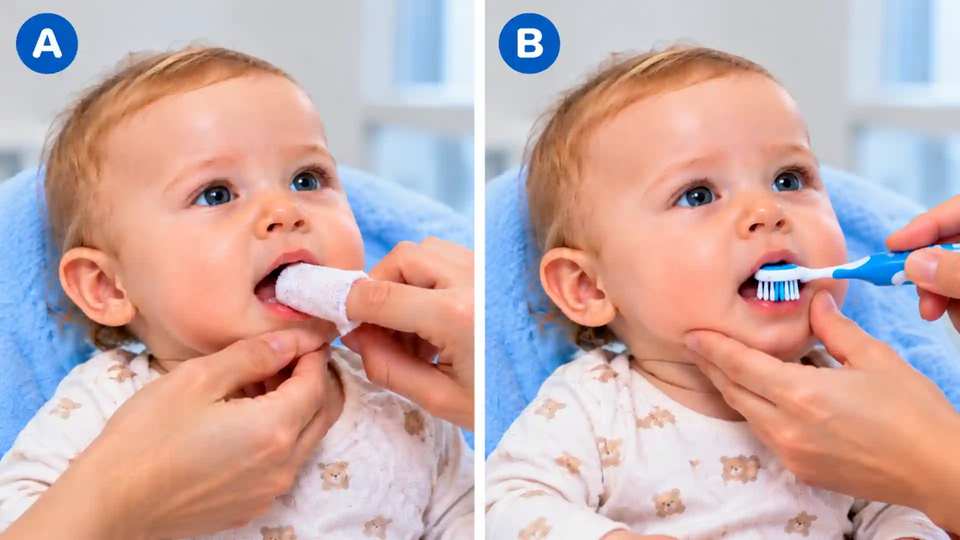
The correct quiz answer is A: Damp gauze. Before a baby's first tooth appears, clean, damp gauze or a soft, damp washcloth is generally sufficient for gently wiping the gums. Use plain water and light pressure to avoid irritating delicate oral tissues.
Key Takeaways:
Clean, damp gauze or a soft washcloth can gently clean a baby's gums before teeth appear.
Wash your hands before touching your baby's mouth.
Use plain water; toothpaste is unnecessary before the first tooth emerges.
Wipe the accessible upper and lower gums gently without scrubbing.
Clean the gums twice daily as part of a simple oral-care routine.
Switch to a soft, small-headed baby toothbrush when the first tooth appears.
Schedule the first dental visit within six months after the first tooth appears and no later than the first birthday.
This guide explains how to clean a baby's gums, which materials are appropriate, and how to transition to toothbrushing when the first tooth erupts.
Medical information notice: This article provides general educational information and does not replace individualized examination, diagnosis, or treatment from a licensed dental professional.
Quiz Answer: What Can You Use to Gently Clean a Baby's Gums?
Damp gauze is the correct answer. A clean piece of gauze moistened with plain water can gently wipe a baby's gums before the first tooth appears. A soft, damp washcloth is another suitable option.
A hard-bristle brush is not appropriate for this task because a baby's oral tissues are delicate. Before teeth erupt, the goal is to wipe the accessible gum surfaces gently rather than scrub them.
Wash your hands first, wrap the damp gauze around a clean finger, and use light pressure. Stop if your baby becomes very distressed, and never force your finger between tightly closed jaws. Once the first tooth appears, begin brushing with a soft, small-headed baby toothbrush.
What Do You Need to Clean a Baby's Gums?
You do not need an expensive kit to clean a baby's gums. A clean, soft, damp washcloth or a piece of clean gauze is generally sufficient.
A soft washcloth is often the simplest option because it is easy to clean and does not require a special purchase. If you use gauze, choose a fresh piece that will not easily unravel, and avoid leaving fibers in the baby's mouth.
An infant finger brush may be convenient for some caregivers, but it is not essential. A baby toothbrush is not necessary for toothless gums; introduce a soft, small-headed brush when the first tooth appears.
Use plain water to moisten the cloth or gauze. Before the first tooth emerges, there is no need to apply toothpaste to the gums. Avoid adult mouthwash, hydrogen peroxide, alcohol-based products, essential oils, or homemade chemical mixtures.
How to Clean a Baby's Gums Step by Step
Step 1: Wash your hands thoroughly with soap and water before touching your baby's mouth.
Step 2: Moisten a clean, soft washcloth with plain water and wring out excess moisture. If using gauze, choose a clean piece that will not easily unravel.
Step 3: Position your baby comfortably in your arms or in a stable, supported position appropriate for their age. Choose a time when your baby is reasonably calm and alert.
Step 4: Wrap the damp gauze or cloth around your clean finger and gently wipe along the accessible upper gumline using light pressure and small, controlled movements.
Step 5: Gently wipe the lower gumline in the same way. Work only in areas you can reach comfortably and see clearly. Do not push your finger toward the back of the mouth or force the jaw open.
Step 6: Briefly check for visible sores, unusual patches, swelling, or irritation. Do not scrape attached white patches or attempt to clean the throat.
Step 7: Remove the cloth or gauze gently and check that no fibers remain in the mouth. Wash reusable cloths after use and allow them to dry completely. Dispose of used gauze appropriately.
The routine should take only as long as your baby comfortably tolerates. Gentle, consistent cleaning is more useful than a prolonged attempt to achieve a perfectly clean-looking mouth.
When and How Often Should You Clean a Baby's Gums?
The Centers for Disease Control and Prevention (CDC) recommends wiping babies' gums twice daily with a soft, clean cloth. A practical routine is in the morning after the first feeding and right before bed.
A predictable schedule helps caregivers remember the task and makes oral care part of the baby's daily routine. You can gently wipe away visible residue after other feedings when useful, without turning every feeding into a lengthy oral-care procedure.
If your baby has a medical condition affecting the mouth, feeding, or swallowing, ask the pediatrician or dentist whether additional precautions are necessary.
Reference: CDC, Oral Health Tips for Children: https://www.cdc.gov/oral-health/prevention/oral-health-tips-for-children.html.
Common Mistakes to Avoid During Baby Gum Cleaning
Scrubbing too hard: A baby's gums are delicate. Use light contact rather than vigorous rubbing or repeated scraping.
Using toothpaste before teeth appear: Plain water on clean, damp gauze or a washcloth is sufficient for routine gum wiping before the first tooth emerges.
Using hard-bristle brushes: Hard bristles are not suitable for gently wiping a baby's gums. Use soft materials and transition to a soft baby toothbrush when the first tooth appears.
Using adult oral-care products: Adult mouthwashes, whitening products, abrasive powders, and strong antiseptic preparations are not substitutes for a damp cloth.
Reusing dirty or damp materials: Use clean gauze for each session and wash reusable cloths thoroughly. Allow cloths to dry completely between uses.
Scraping away white patches: Not every white area in a baby's mouth is milk residue. Do not scrape persistent patches; contact a pediatrician or dentist if they remain or are associated with discomfort or feeding problems.
When Should You Seek Professional Advice?
Seek professional advice if you notice persistent gum swelling, unusual bleeding, apparent pain, white patches that do not clear with gentle routine cleaning, sores that persist or worsen, or discomfort that interferes with feeding.
Seek urgent medical or dental assessment for significant facial swelling, severe pain, or suspected infection. Difficulty breathing or swallowing requires emergency medical care.
If cleaning consistently causes apparent pain or unusual distress, discuss the problem with a healthcare professional rather than forcing the routine.
How Does Gum Cleaning Change When the First Tooth Appears?
Once the first tooth erupts, oral care changes from wiping toothless gums to cleaning both the teeth and the surrounding gumline.
Choose a toothbrush with a small head, soft bristles, and a handle that allows a caregiver to maintain control. Brush gently twice daily, including before bedtime.
The American Academy of Pediatric Dentistry (AAPD) recommends a smear of fluoride toothpaste approximately the size of a grain of rice for children younger than three. The CDC advises consulting a dentist or doctor about fluoride toothpaste use for children younger than two.
Discuss these recommendations with your baby's dental professional so that you understand the appropriate approach for your child's age and circumstances. Babies cannot reliably spit out toothpaste, so caregivers should control the quantity and supervise brushing closely.
Reference: AAPD, Frequently Asked Questions: https://www.aapd.org/resources/parent/faq/.
When Should You Schedule a Baby's First Dental Visit?
A baby's first dental visit should be scheduled within six months after the first tooth appears and no later than the first birthday. This appointment helps establish a dental home, assess oral development, and give caregivers individualized advice on infant dental care.
If you have concerns before the first tooth erupts, you do not need to wait for the scheduled dental visit to ask for advice. A pediatrician can assess oral symptoms and recommend dental evaluation when appropriate.
References:
CDC, Oral Health Tips for Children: https://www.cdc.gov/oral-health/prevention/oral-health-tips-for-children.html
AAPD, Frequently Asked Questions: https://www.aapd.org/resources/parent/faq/.
Frequently Asked Questions About Cleaning a Baby's Gums
What can you use to gently clean a baby's gums?
Clean, damp gauze or a soft, damp washcloth is generally sufficient before the first tooth appears. Use plain water and gentle pressure.
How often should I clean my baby's gums?
The CDC recommends wiping a baby's gums twice daily with a soft, clean cloth. A morning session and another before bedtime can help establish a consistent routine.
Should I use toothpaste when cleaning toothless gums?
No. Plain water on clean, damp gauze or a washcloth is sufficient before the first tooth appears. Begin brushing with an age-appropriate toothbrush when the first tooth erupts.
Can I use a hard-bristle brush on my baby's gums?
No. A hard-bristle brush is not suitable for this task. Use soft, damp gauze or a washcloth before teeth appear, then switch to a soft, small-headed baby toothbrush when the first tooth emerges.
What if my baby's gums bleed during cleaning?
Stop rubbing the affected area. If bleeding persists, recurs, or occurs with swelling or apparent pain, contact your baby's dentist or pediatrician for assessment.
When should my baby's first dental appointment take place?
Arrange the first dental visit within six months after the first tooth appears and no later than the first birthday.
Sources
- Centers for Disease Control and Prevention (CDC). Oral Health Tips for Children. https://www.cdc.gov/oral-health/prevention/oral-health-tips-for-children.html
- American Academy of Pediatric Dentistry (AAPD). Frequently Asked Questions. https://www.aapd.org/resources/parent/faq/
- American Academy of Pediatrics, HealthyChildren.org. Why It's Important to Take Care of Baby Teeth. https://www.healthychildren.org/English/ages-stages/baby/teething-tooth-care/Pages/How-to-Prevent-Tooth-Decay-in-Your-Baby.aspx
- American Dental Association (ADA), MouthHealthy. Breastfeeding and Oral Health. https://www.ada.org/sitecore/content/ADA-Organization/ADA/MouthHealthy/home/all-topics-a-z/breastfeeding