Choosing a Toothbrush for Young Children: Soft Bristles and a Small Brush Head
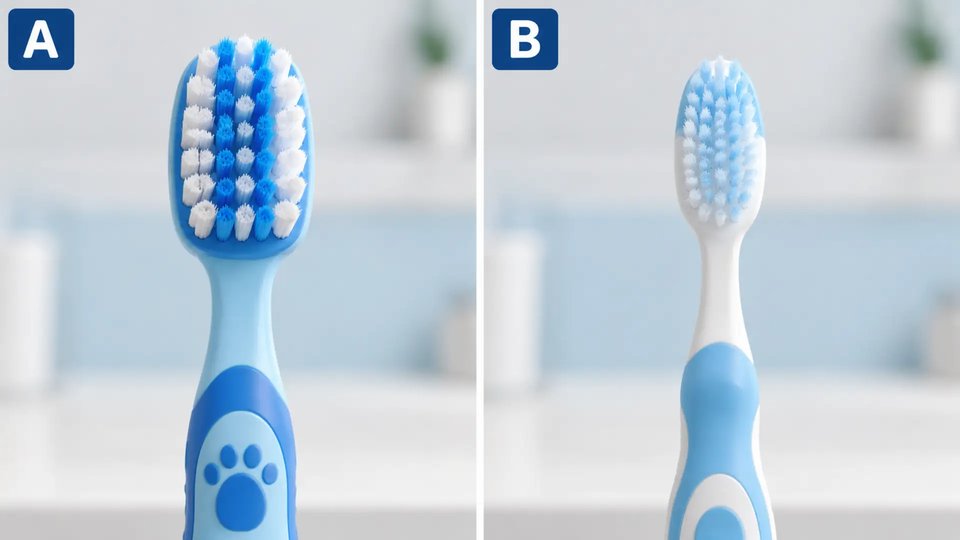
The correct quiz answer is B: Soft bristles and a small head. A suitable toothbrush for young children should have soft bristles, a compact head that fits comfortably inside the mouth, and a handle that an adult can control effectively.
Key Takeaways:
Choose a soft-bristled toothbrush designed for infants, toddlers, or young children.
A small brush head helps reach the back molars and other tooth surfaces comfortably.
Hard bristles are unnecessary for routine children's oral care and may irritate the gums.
Both manual and electric toothbrushes can clean teeth effectively when used correctly.
Parents should perform or supervise brushing until children develop reliable brushing skills, often around age seven or eight.
Replace a toothbrush every three to four months or sooner if the bristles become frayed or damaged.
This guide explains how to choose a suitable toothbrush, assess brush-head fit, and establish a practical brushing routine for young children.
Medical information notice: This article provides general educational information and does not replace individualized examination, diagnosis, or treatment from a licensed dental professional.
Quiz Answer: Which Toothbrush Is Better Suited for Young Children?
Soft bristles and a small head are the correct answer. A child-sized toothbrush with soft bristles can clean teeth while helping minimize gum irritation. Its compact head also makes it easier to reach the back molars, inner surfaces, and areas near the gumline.
Hard bristles and a large head are less suitable for young children. Stiff bristles can irritate the gums, while an oversized head may be difficult to maneuver inside a small mouth.
The American Dental Association (ADA) recommends soft-bristled toothbrushes for routine oral care. Parents should also choose a brush that fits the child's mouth comfortably and continue performing or supervising brushing until the child can clean every surface reliably.
What Makes a Good Toothbrush for Young Children?
A suitable toothbrush for young children should meet three essential requirements: soft bristles, a small brush head, and a comfortable handle. These features make it easier for caregivers to clean the child's teeth without applying excessive pressure or struggling to reach the back of the mouth.
The ADA recommends soft-bristled toothbrushes because they clean teeth while helping minimize the risk of gum abrasion. A child-sized brush head should be small enough to maneuver comfortably inside a young child's mouth.
A toothbrush does not need complicated features to be effective. Fit, bristle softness, regular use, and correct brushing technique matter more than decorative designs or premium packaging.
Why Should Children Use a Soft-Bristle Toothbrush?
A soft-bristled toothbrush is recommended for children because it can remove plaque without requiring forceful scrubbing. Plaque is a sticky film containing bacteria that accumulates on teeth and contributes to tooth decay and gum inflammation.
Medium or hard bristles are not necessary for routine children's oral care. Brushing harder does not automatically remove more plaque, and excessive pressure combined with stiff bristles can irritate the gums.
If brushing repeatedly causes pain or bleeding, do not assume the toothbrush is the only possible cause. A dentist can check for gum inflammation, cavities, injuries, or other oral health problems.
Why Does a Toothbrush for Young Children Need a Small Head?
A small brush head helps parents reach the surfaces of teeth in a small mouth. It can make it easier to clean the back molars, the inner surfaces of the front teeth, and the areas near the gumline.
An adult toothbrush may have a head that is too wide or long to move comfortably around a toddler's cheeks and tongue. The child may gag, close their mouth, or resist brushing because the brush feels uncomfortable.
A toddler toothbrush with a small head is therefore a practical starting point, but the smallest available brush is not automatically the best. The head must still be large enough to clean the teeth efficiently.
Is a Manual or Electric Toothbrush Better for Young Children?
Both manual and electric toothbrushes can be effective. The better choice is the one that fits the child's mouth, feels comfortable, and allows an adult to clean every surface consistently.
A powered brush may help a child who enjoys its movement or benefits from a built-in timer. A manual brush may be preferable for a child who dislikes vibration, is sensitive to noise, or becomes distracted by extra features.
There is no need to purchase an electric toothbrush simply because it is marketed as more advanced. Technique, coverage, consistency, and adult involvement remain essential.
How Should Parents Brush a Young Child's Teeth?
Choosing the right toothbrush is only the first step. Children also need an appropriate brushing routine, the correct amount of fluoride toothpaste, and help reaching every tooth surface.
Use a clean, soft-bristled child-sized toothbrush. An adult should dispense the appropriate amount of fluoride toothpaste rather than allowing a toddler to squeeze it onto the brush independently.
Brush the outer surfaces, inner surfaces, and chewing surfaces using gentle, short strokes. Pay particular attention to the back teeth and areas near the gumline. The brush should reach each surface without requiring uncomfortable movements or excessive pressure.
A young child can participate by holding the brush or copying an adult's movements. However, participation should not replace adult cleaning until the child has the coordination and judgment to brush thoroughly.
Many children need assistance or close supervision until around age seven or eight. Independence should depend on whether the child can reliably clean every tooth surface, not age alone.
How Much Toothpaste Should a Young Child Use?
For most children, fluoride toothpaste is an important part of cavity prevention. The amount should be small because young children may swallow toothpaste rather than spit it out reliably.
General U.S. dental guidance recommends a smear approximately the size of a grain of rice for children younger than three and no more than a pea-sized amount for children ages three through six.
Begin brushing with an appropriate amount of fluoride toothpaste as soon as the first tooth erupts. An adult should dispense the toothpaste and supervise brushing. Encourage children to spit out excess toothpaste when they are developmentally able.
Ask your child's dentist if you have questions about fluoride use or individual cavity risk.
When Should You Replace a Child's Toothbrush?
Replace a toothbrush approximately every three to four months, or sooner if the bristles become frayed, flattened, or damaged. Worn bristles are less effective at cleaning and may be more difficult to control around the gumline.
Children who chew their toothbrushes may wear out the bristles faster. Inspect the brush regularly rather than relying exclusively on the date it was purchased.
For powered brushes, follow the manufacturer's instructions for changing the brush head. Rinse the brush after use, allow excess water to drain, and store it upright where it can air-dry.
Common Toothbrush Mistakes to Avoid
Choosing a brush with stiff bristles: Soft bristles are recommended for routine children's brushing because they clean effectively while helping minimize gum abrasion.
Buying an adult-sized brush too early: A large head can make it difficult to reach the back teeth comfortably. Choose a size that fits the child's mouth rather than relying on age labels alone.
Letting a toddler brush independently: Young children can practice, but adults should perform or finish the cleaning until the child has reliable brushing skills.
Assuming electric means better: Both manual and powered brushes can work well. Choose based on fit, comfort, cooperation, and your ability to supervise.
Keeping a worn brush too long: Replace frayed or damaged bristles rather than waiting for a fixed date.
Frequently Asked Questions About Toothbrushes for Young Children
Which toothbrush is better suited for young children?
A toothbrush with soft bristles and a small head is generally the better choice. It can clean teeth comfortably while helping minimize gum irritation.
Are hard bristles better at removing plaque?
No. Hard bristles are not necessary for routine children's oral care. Gentle brushing with soft bristles can remove plaque while helping protect the gums.
Why does a child need a small toothbrush head?
A small head makes it easier to reach the back molars, inner tooth surfaces, and gumline without pressing uncomfortably against the cheeks.
Is an electric toothbrush better than a manual toothbrush for toddlers?
Not necessarily. Both can be effective when used correctly. Choose the option that fits comfortably and allows an adult to brush every tooth surface.
When can children brush without help?
Many children need assistance or close supervision until around age seven or eight. Their ability to clean every surface reliably is more important than age alone.
How often should I replace my child's toothbrush?
Replace it every three to four months or sooner if the bristles become frayed or damaged. Follow the manufacturer's guidance for powered brush heads.
Sources
- American Dental Association (ADA). Toothbrushes. https://www.ada.org/resources/ada-library/oral-health-topics/toothbrushes
- American Academy of Pediatric Dentistry (AAPD). Frequently Asked Questions for Parents. https://www.aapd.org/resources/parent/faq/
- American Academy of Pediatrics (AAP). Toothbrushing Tips for Young Children. https://www.healthychildren.org/English/healthy-living/oral-health/Pages/Toothbrushing-Tips-for-Young-Children.aspx
- Centers for Disease Control and Prevention (CDC). About Fluoride and Oral Health. https://www.cdc.gov/oral-health/prevention/about-fluoride.html
- U.S. Health Resources and Services Administration (HRSA). Oral Health for Young Children. https://www.hrsa.gov/oral-health/young-children