Dental Crowns: How They Protect Damaged Teeth and What Treatment Involves
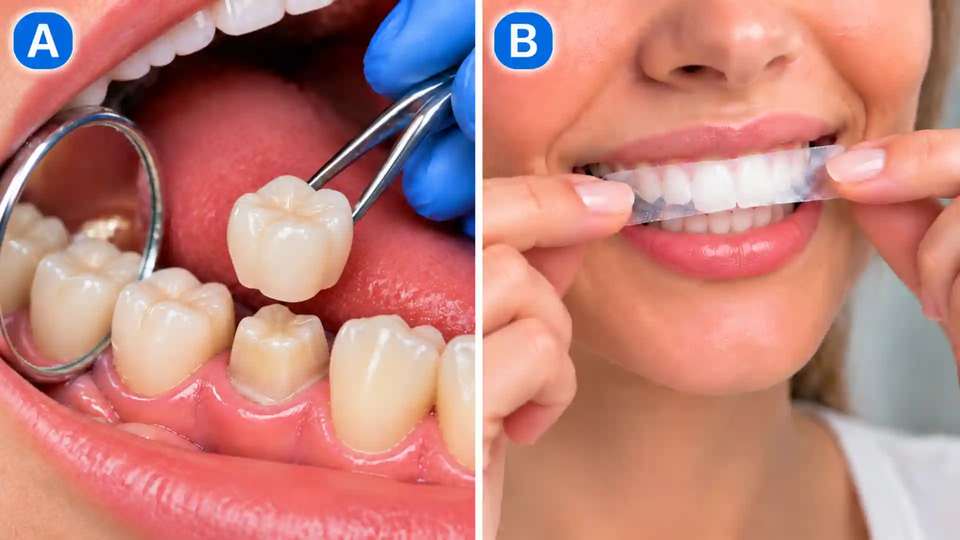
The correct quiz answer is A: Dental crown. Dental crowns protect damaged teeth by covering weakened tooth structure and restoring shape, strength, and chewing function. A dentist may recommend a crown for a broken tooth, extensive decay, a large filling, or a tooth weakened by root canal treatment. The procedure usually involves preparing the tooth, taking impressions, and fitting a custom restoration.
Key Takeaways:
Dental crowns cover and protect weakened teeth while helping restore normal chewing function.
Not every damaged tooth needs a crown. Smaller defects may be treated with fillings, bonding, or partial restorations.
Crown materials include glass-ceramics, zirconia ceramics, metal alloys, porcelain-fused-to-metal, and resin-based materials.
Traditional crown treatment often requires two appointments, although some patients may be eligible for same-day restorations.
Crowns can last many years, but they do not prevent every cavity, gum problem, or tooth fracture.
Dental crown costs and insurance coverage vary according to the material, treatment complexity, and individual plan.
This guide explains how dental crowns work, when they are recommended, what happens during treatment, and how to compare materials, costs, and long-term care.
Medical information notice: This article provides general educational information and does not replace individualized dental examination, diagnosis, or treatment.
Quiz Answer: Which Dental Treatment Can Cover and Protect a Damaged Tooth?
A dental crown is the correct answer. A crown is a custom-made restoration that covers the visible portion of a prepared tooth and helps protect weakened tooth structure.
Dental crowns can restore the shape and chewing function of teeth affected by extensive decay, fractures, large fillings, or certain types of wear. They are also commonly considered when a tooth has lost substantial structure and needs additional support after root canal treatment.
Whitening strips are not designed to repair teeth. They use bleaching ingredients to change the color of natural teeth but cannot replace missing tooth structure, reinforce weakened cusps, or stabilize a fracture.
Not every damaged tooth requires a crown. A dentist must examine the tooth to determine whether bonding, a filling, an inlay, an onlay, a crown, or another treatment is appropriate.
When Does a Damaged Tooth Need a Dental Crown?
A dental crown is a custom-made restoration that covers the visible portion of a prepared tooth. It is sometimes called a dental cap.
Dentists recommend crowns when a tooth needs more protection or structural support than a smaller restoration can provide.
Extensive decay: A crown may be appropriate when too much healthy tooth structure is missing for a conventional filling.
Broken or fractured teeth: A crown may restore shape and protect remaining structure when the fracture is suitable for restoration.
Large fillings: Teeth with substantial fillings may have weakened walls or cusps that benefit from additional coverage.
Severe wear: Crowns may restore selected teeth affected by substantial grinding or erosion.
Root canal treatment: Some treated teeth, particularly back teeth with major structural loss, require additional protection.
Dental implants and bridges: Crowns can form the visible replacement tooth on an implant or support certain types of dental bridges.
The decision depends on how much healthy tooth structure remains, the tooth's location, and the health of its roots and surrounding tissues.
How Does a Dental Crown Protect a Damaged Tooth?
A crown protects a tooth by covering weakened surfaces and helping distribute chewing forces across the remaining structure.
Unlike a filling, which restores a specific damaged area, a full-coverage crown surrounds the prepared tooth above the gumline. This can be especially useful when multiple cusps, the raised portions of a back tooth's chewing surface, are weakened.
Crowns also restore tooth shape and contact with neighboring teeth, helping people bite and chew more comfortably.
However, a crown has limitations. It does not regenerate lost enamel or dentin, eliminate infection inside the tooth, or guarantee that an existing deep crack will stop progressing.
A severely fractured tooth may require root canal treatment or extraction instead. An accurate diagnosis is essential before choosing a restoration.
Is a Dental Crown Better Than a Filling or Bonding?
A crown is generally more appropriate when a tooth requires extensive structural protection. A filling or dental bonding may preserve more natural tooth structure when damage is limited.
Composite filling: Commonly used for small to moderate cavities or defects. It replaces a specific damaged area but may be insufficient for extensively weakened teeth.
Dental bonding: Uses tooth-colored composite resin to repair minor chips or selected surface defects, often with relatively little tooth preparation. It provides limited support for major fractures.
Inlay or onlay: A custom partial restoration may be appropriate when damage is larger than a simple filling but does not necessarily require a full crown. An inlay fits within the chewing surface, while an onlay covers one or more cusps.
Dental crown: Covers the prepared tooth and provides broader protection for large restorations, weakened teeth, and selected fractures. More natural tooth preparation is usually required.
Root canal plus crown: Root canal treatment addresses diseased pulp, while the crown restores and protects the remaining outer tooth structure.
The choice depends on the condition of the tooth rather than simply which treatment is more expensive.
What Are the Different Types of Dental Crowns?
Dental crowns can be made from several material groups, including glass-ceramics, zirconia ceramics, metal alloys, porcelain-fused-to-metal, and resin-based materials.
Zirconia is itself a type of dental ceramic, but its properties differ from those of glass-ceramics such as lithium disilicate.
Glass-ceramic, such as lithium disilicate: Offers natural appearance and good translucency. Strength and fracture resistance vary by ceramic type and clinical application. Often considered for visible teeth, although selected materials can also be used for back teeth.
Zirconia ceramic: Offers high strength and tooth-colored appearance. Translucency and mechanical properties vary among zirconia formulations. Often considered for back teeth, while some formulations are appropriate for visible front teeth.
Porcelain-fused-to-metal: Combines metal support with a tooth-colored exterior. The porcelain may chip, and underlying metal may become visible over time.
Metal alloy: Durable and resistant to fracture, but the metallic appearance may be less desirable for visible teeth.
Resin-based crown: Tooth-colored and potentially repairable, but some resin materials may be less resistant to wear or fracture than selected ceramic or metal alternatives.
Temporary crown: Often made from acrylic or resin and designed to protect a prepared tooth while the permanent restoration is manufactured.
No material is universally best. Appearance, biting forces, tooth location, allergies, remaining structure, and cost all influence the recommendation.
Which Crown Material Is Better for Front and Back Teeth?
The most suitable crown material depends on whether the tooth is visible, how much chewing force it experiences, and its remaining healthy structure.
For front teeth, appearance often receives greater attention. Glass-ceramics, including selected lithium disilicate restorations, can provide natural-looking color and translucency. Some zirconia formulations are also suitable for visible front teeth.
For back teeth, strength and resistance to chewing forces are particularly important. Zirconia ceramics, metal alloys, and selected glass-ceramics may be appropriate depending on clinical circumstances.
Patients who grind or clench their teeth may require special attention to material selection and bite management.
A strong crown material does not guarantee a longer-lasting restoration. Proper fit, preparation, oral hygiene, remaining tooth structure, and chewing forces remain important.
What Happens During a Dental Crown Procedure?
A conventional dental crown procedure usually involves two appointments: one to prepare the tooth and record its shape, and another to fit the finished restoration.
Step 1: Examination and diagnosis. The dentist assesses the damaged tooth and may take X-rays to evaluate decay, existing restorations, roots, and surrounding bone.
Step 2: Local anesthesia. Anesthesia is commonly used when needed to keep the area comfortable during preparation.
Step 3: Tooth preparation. The dentist removes damaged material and shapes the remaining tooth to create room for the crown. A buildup may be needed if substantial tooth structure is missing.
Step 4: Impressions or digital scanning. The prepared tooth, neighboring teeth, and bite are recorded so the restoration can be designed.
Step 5: Temporary crown. When the permanent crown is made in a laboratory, a temporary restoration usually protects the prepared tooth between visits.
Step 6: Permanent crown fitting. The dentist checks the finished crown's fit, appearance, contacts with adjacent teeth, and bite. Adjustments may be necessary.
Step 7: Final placement. The crown is secured with an appropriate dental cement or bonding technique, and the patient receives care instructions.
The exact process may differ when root canal treatment, extensive buildup, or other procedures are required.
Is a Same-Day Crown Better Than a Traditional Crown?
A same-day crown may reduce the number of appointments, but it is not automatically better for every patient.
Traditional laboratory crowns usually require two visits. The dentist prepares the tooth and records its shape, while the final restoration is manufactured in a dental laboratory. A temporary crown commonly protects the tooth between appointments.
Some dental practices use computer-aided design and manufacturing technology, called CAD/CAM, to scan, design, and produce a crown in the office. This may allow treatment in a single appointment.
Same-day crowns can reduce the need for temporary restorations, but available materials and manufacturing options depend on the equipment and clinical case.
Neither approach guarantees superior fit or longevity solely because of where the crown is made. Ask which method and material are suitable for your specific tooth.
Does Getting a Dental Crown Hurt?
Dental crown preparation is generally performed with local anesthesia when needed, so significant pain during the procedure is not expected.
After treatment, mild gum tenderness or temporary temperature sensitivity may occur. These symptoms often improve as the tissues recover.
Some patients notice soreness when biting or feel that the new crown contacts another tooth before the surrounding teeth do. A crown that feels noticeably high or causes persistent discomfort should be checked and adjusted if necessary.
Do not assume significant pain is normal simply because treatment was recent. Contact the dental office promptly if discomfort worsens, interferes with sleep, or occurs with swelling.
Follow the dentist's instructions about eating, cleaning, and caring for the restoration while any anesthesia wears off.
How Should You Care for a Temporary Crown?
A temporary crown protects the prepared tooth while the permanent restoration is being made. It is usually less durable than a final crown and may be attached with temporary cement.
Avoid unusually sticky foods that may pull the temporary crown loose and hard foods that could damage it. Chewing on the opposite side may be more comfortable when practical.
Continue gentle brushing and follow your dentist's instructions for cleaning between teeth. Flossing technique may need adjustment to avoid dislodging the temporary restoration.
If the temporary crown falls off, keep it in a safe container and contact the dental office for instructions.
Do not attempt to reattach a crown using household superglue or other household adhesives.
How Long Do Dental Crowns Last?
Dental crowns commonly last approximately 5 to 15 years according to Cleveland Clinic, although some last considerably longer and others require earlier replacement.
This is a general clinical range rather than a warranty or prediction for an individual crown.
Longevity depends on the crown material, quality of fit, remaining tooth structure, oral hygiene, grinding habits, and surrounding gum and bone health.
Brush twice daily with fluoride toothpaste, clean between teeth daily, and pay attention to the crown margins where the restoration meets the natural tooth.
Avoid routinely chewing ice or other unusually hard objects. Ask your dentist about a night guard if you grind or clench your teeth.
Keep recommended dental examinations and professional cleanings. Report persistent discomfort, looseness, or changes in how the crown fits.
A crown covers the tooth, but the remaining natural structure can still develop decay.
What Problems Can Develop After Crown Placement?
Most crown-related problems can be assessed through a dental examination. Some require minor adjustment, while others involve damage to the crown or underlying tooth.
Mild sensitivity shortly after placement may result from temporary irritation and can improve with recovery. Persistent or worsening symptoms deserve assessment.
A crown that feels too high may require a bite adjustment. Food repeatedly becoming trapped around the restoration may indicate a contact or contour problem.
A loose or dislodged crown requires prompt dental advice. Avoid chewing on the affected tooth until it has been evaluated.
A chipped or cracked crown should be examined before normal chewing continues. Persistent pain or swelling may indicate a problem involving the pulp, tooth, or surrounding tissues.
Decay can develop in the natural tooth beneath a crown, particularly near its margins. If this occurs, the dentist may need to remove or replace the restoration to assess and treat the affected structure.
Severe facial swelling, difficulty breathing or swallowing, or uncontrolled bleeding requires emergency medical evaluation.
How Much Does a Dental Crown Cost in the United States?
Dental crown costs depend on the material, tooth location, treatment complexity, geographic area, and dental office fees.
CareCredit published U.S. national estimates in November 2024 based on its cited cost research. These figures are historical references, not current 2026 prices or guaranteed quotes.
Porcelain crown: Reported average $1,399; published range $915–$3,254.
Porcelain-and-metal crown, non-gold: Reported average $1,114; published range $770–$2,454.
Metallic crown: Reported average $1,211; published range $821–$2,861.
Resin or temporary crown category: Reported average $697; published range $488–$1,593.
The resin or temporary category follows the terminology used in the cited pricing source. It should not be interpreted as the usual separate fee for a standard temporary crown placed during a conventional treatment.
These amounts may exclude examinations, diagnostic imaging, tooth buildup, root canal treatment, and other associated procedures.
Request a current itemized estimate from the treating dental office rather than relying on historical national averages.
Source: CareCredit, How Much Do Dental Crowns Cost? https://www.carecredit.com/well-u/health-wellness/dental-crown-cost-dental-crown-financing/
Does Dental Insurance Cover Dental Crowns?
Dental insurance coverage for crowns varies by plan. Some policies provide benefits for crowns used to restore damaged or decayed teeth, while coverage for predominantly cosmetic treatment may be restricted.
The amount paid can depend on annual maximums, deductibles, waiting periods, network requirements, replacement limitations, and plan exclusions.
Before treatment, ask whether the crown is covered for the diagnosed condition, whether predetermination or prior authorization is required, which materials are eligible, and whether imaging or buildup procedures are billed separately.
Ask the dental office for an estimate of the expected patient responsibility after insurance adjustments.
The American Dental Association distinguishes prior authorization from predetermination of benefits. An estimate of benefits is not necessarily a guarantee of payment, and actual reimbursement depends on plan terms and eligibility when treatment is provided.
Can You Get a Crown After Root Canal Treatment?
Yes. Dental crowns are often used to protect root canal-treated teeth, particularly back teeth with substantial structural loss.
Root canal treatment removes diseased or damaged pulp tissue and treats the internal root canal system. A crown restores and protects the remaining outer tooth structure.
These are separate procedures with different purposes.
Some root canal-treated teeth may be restored with a filling or another restoration when sufficient healthy structure remains. Back teeth exposed to substantial chewing forces may benefit from broader crown coverage.
Not every tooth requiring a crown needs root canal treatment, and not every root canal-treated tooth automatically needs a crown. A dentist determines the appropriate restoration based on tooth location, remaining structure, and clinical findings.
Can Gum Disease Affect the Success of a Dental Crown?
A dental crown requires a stable foundation. Significant gum inflammation, periodontal attachment loss, or tooth mobility may influence treatment planning and the long-term prognosis of the tooth.
Crown treatment and periodontal treatment address different problems. A crown restores damaged tooth structure, while periodontal care addresses disease affecting the tissues and bone that support teeth.
If substantial periodontal disease is present, the dentist may recommend treating or stabilizing the supporting tissues before placing a definitive restoration.
A crown does not substitute for gingivitis treatment, periodontal maintenance, or other indicated gum care.
Daily plaque control around crown margins and regular professional examinations remain important after treatment.
How Can You Decide Whether a Dental Crown Is Right for You?
The decision should begin with an accurate diagnosis rather than the crown material or price.
Ask your dentist what damage or weakness makes a crown necessary and whether the tooth's pulp and supporting tissues are healthy.
Discuss whether a filling, bonding, inlay, or onlay could preserve more natural tooth structure while providing sufficient protection.
Ask which crown materials are appropriate for the tooth, how much preparation is required, and whether a buildup or additional procedure is necessary.
For a small chipped front tooth, bonding may be sufficient when damage is limited. A molar with a large filling and weakened cusps may benefit from a crown. A cracked tooth with persistent pain requires assessment of the fracture and pulp before restoration is selected.
Before agreeing to treatment, discuss the expected prognosis, alternatives, possible complications, and total estimated cost after insurance adjustments.
Common Mistakes to Avoid
Assuming every damaged tooth needs a crown: Smaller restorations may be appropriate when enough healthy tooth structure remains.
Choosing a material based only on price: Appearance, tooth location, chewing forces, and clinical needs should guide material selection.
Assuming a crown prevents all future cavities: The natural tooth beneath a crown remains vulnerable to decay, particularly around its margins.
Ignoring a loose crown: Continued chewing may damage the restoration or exposed tooth structure. Contact the dental office promptly.
Expecting a crown to last forever: Longevity varies, and even a well-maintained crown may eventually need repair or replacement.
Frequently Asked Questions About Dental Crowns
Which dental treatment can cover and protect a damaged tooth?
A dental crown covers a prepared tooth and helps protect weakened structure while restoring shape and chewing function. Whitening strips change tooth color but do not repair structural damage.
Can a dental crown save a badly damaged tooth?
Sometimes. A crown can protect and restore a tooth with substantial damage when enough healthy structure remains. A crown cannot predictably save every tooth, especially when fractures extend too deeply or supporting tissues are severely compromised.
How many appointments does a dental crown require?
Traditional laboratory-made crowns usually require two appointments: one for preparation and impressions and another for final placement. Some practices offer same-day crowns using digital technology.
Is a dental crown permanent?
A crown is designed as a long-term restoration but may eventually require repair or replacement. Lifespan depends on materials, fit, oral hygiene, biting forces, and tooth condition.
Can you eat normally after getting a dental crown?
Most patients can gradually resume normal eating according to their dentist's instructions. Avoid chewing until local anesthesia wears off and follow guidance about temporary crowns or newly placed restorations.
Is a crown always necessary after a root canal?
No. Some root canal-treated teeth can be restored with a filling or another restoration. Back teeth and teeth with substantial structural loss often benefit from crown coverage, but the choice requires an individual examination.
How much does a dental crown cost without insurance?
CareCredit's November 2024 U.S. references reported average costs of $1,399 for a porcelain crown, $1,114 for a porcelain-and-metal crown, and $1,211 for a metallic crown. These are historical averages, not current quotes, and additional procedures may increase the total.
Sources
- American Dental Association (ADA), MouthHealthy. Crowns. https://www.mouthhealthy.org/all-topics-a-z/crowns/
- Cleveland Clinic. Dental Crowns: Types, Procedure & Care. https://my.clevelandclinic.org/health/treatments/10923-dental-crowns
- American Dental Association (ADA). Materials for Indirect Restorations. https://www.ada.org/resources/ada-library/oral-health-topics/materials-for-indirect-restorations
- American Association of Endodontists (AAE). Saving Your Natural Tooth. https://www.aae.org/patients/root-canal-treatment/saving-natural-tooth/
- National Library of Medicine, MedlinePlus. Dental Crowns. https://www.medlineplus.gov/ency/article/007631.htm
- American Dental Association, MouthHealthy. Brushing Your Teeth. https://www.mouthhealthy.org/all-topics-a-z/brushing-your-teeth
- American Dental Association (ADA). Pre-Authorizations. https://www.ada.org/resources/practice/dental-insurance/pre-authorizations
- CareCredit. How Much Do Dental Crowns Cost? Pricing and Insurance Guide. November 15, 2024. https://www.carecredit.com/well-u/health-wellness/dental-crown-cost-dental-crown-financing/