Retainers After Braces: Why They Keep Teeth in Position and How to Care for Them
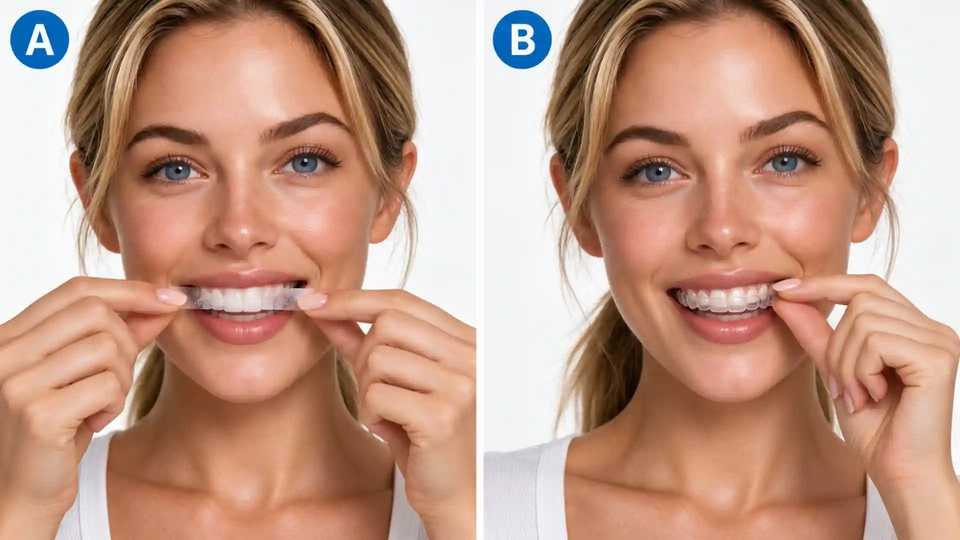
The correct quiz answer is B: Retainer. Retainers help maintain tooth alignment after braces because teeth can continue to shift even after orthodontic treatment is complete. An orthodontic retainer holds teeth in their corrected positions while surrounding tissues adapt, reducing unwanted movement over time. Whether you receive clear, Hawley, or bonded retainers, consistent wear, gentle cleaning, and timely replacement help protect your results.
Key Takeaways:
Retention is part of orthodontic treatment. Removing braces ends active tooth movement, not the need to maintain the result.
Long-term retainer wear is common. Many patients eventually wear removable retainers at night, but the schedule must come from their orthodontist.
Clear and Hawley retainers are removable, while bonded retainers remain attached to selected teeth.
A retainer that does not fit properly, causes significant pain, or appears damaged requires professional assessment.
Initial retainers may be included in orthodontic treatment fees, while replacement or repair costs may be separate.
Consistent cleaning, proper storage, and timely professional checks help maintain retainer function.
This guide explains why teeth shift after braces, how different retainers work, how to clean them safely, and what to do when an appliance breaks, goes missing, or stops fitting.
Medical information notice: This article provides general educational information and does not replace individualized orthodontic examination, diagnosis, or treatment advice.
Quiz Answer: What Helps Keep Teeth in Position After Braces Are Removed?
A retainer is the correct answer. Orthodontic retainers are designed primarily to maintain the positions achieved during braces treatment.
Even after teeth have been straightened, the surrounding tissues continue adapting, and tooth positions may gradually change. Consistent retainer wear helps reduce unwanted shifting.
Whitening strips are not the correct answer. They are cosmetic products intended to lighten tooth color and do not provide orthodontic retention or prevent teeth from moving.
Different retainer designs serve different needs. Removable retainers require consistent wear according to the prescribed schedule, while fixed retainers remain bonded behind selected teeth.
Follow your orthodontist's instructions rather than assuming that straight-looking teeth no longer require retention.
Why Do You Need a Retainer After Braces?
A retainer helps maintain the alignment achieved with braces. Unlike active orthodontic appliances, it is designed primarily to hold tooth positions rather than move teeth.
The American Association of Orthodontists (AAO) explains that teeth can shift as supporting tissues adapt and the mouth changes with age. Following prescribed retention instructions reduces orthodontic relapse, which means unwanted movement toward previous tooth positions.
Teeth are supported by bone and a periodontal ligament connecting each root to the surrounding bone. These tissues adapt during and after orthodontic treatment, leaving teeth susceptible to further movement.
Natural changes in tooth position may continue throughout adulthood. This is why orthodontic treatment plans commonly include long-term retention.
No retainer guarantees that teeth will remain perfectly unchanged forever. Appliances can wear out, detach, or stop fitting, and changes in crowding or bite should be discussed with an orthodontist.
Retention maintains alignment; it is not the same as actively straightening teeth again.
How Long Should You Wear Retainers After Braces?
Long-term orthodontic retention is common, but the appropriate wear schedule varies among patients.
Immediately after braces: Some patients are instructed to wear removable retainers for much of the day, removing them for meals and cleaning. Confirm the exact daily schedule and follow-up appointment with your orthodontist.
After the initial stabilization period: Some patients transition to nighttime wear when their orthodontist determines that their teeth are sufficiently stable.
Long-term maintenance: Nighttime wear or another prescribed schedule may continue indefinitely to help reduce unwanted tooth movement.
After loss or poor fit: Contact the orthodontist promptly if an appliance is lost, damaged, or no longer fits correctly.
These are common approaches rather than universal durations. Do not reduce or stop retainer wear based solely on how straight your teeth appear.
A fixed bonded retainer does not necessarily eliminate the need for a removable nighttime appliance. Bonded wires often support selected front teeth, while removable retainers may cover more teeth.
Which Type of Orthodontic Retainer Is Best?
The three common orthodontic retainer designs are clear removable retainers, Hawley retainers, and fixed bonded retainers. Each has different advantages and maintenance requirements.
Clear removable retainers: These custom-fitted plastic trays are usually discreet and can be removed for eating and cleaning. Their effectiveness depends on consistent wear. Heat, cracks, distortion, or loss can affect their performance.
Hawley retainers: These appliances combine acrylic with metal wires. They are generally more visible than clear trays but may be durable and professionally adjustable in selected cases. Patients should never attempt to bend the wires themselves.
Fixed or bonded retainers: A thin wire is bonded behind selected teeth and remains in place without daily insertion. The bonding may loosen, and plaque may accumulate around the wire, making careful cleaning and professional checks important.
There is no universally best retainer. Visibility, cleaning ability, patient consistency, tooth alignment, and clinical needs all influence the recommendation.
Permanent vs. Removable Retainer: What Are the Trade-Offs?
Clear removable retainers, Hawley retainers, and fixed bonded retainers differ in visibility, convenience, cleaning, and maintenance.
Clear removable retainers are generally discreet and easy to remove for meals. However, missed wear reduces their benefit, and plastic trays may be damaged by heat or cracking.
Hawley retainers are removable and use a wire-and-acrylic design. The front wire may be visible, but some designs can be adjusted professionally.
Fixed bonded retainers stay attached behind selected teeth and work continuously while the bonding remains intact. They require careful cleaning around the wire and regular checks for looseness or breakage.
Removable retainers rely on patients wearing them consistently. Fixed retainers rely on intact attachments and do not necessarily hold the entire bite.
If you frequently forget to wear removable appliances or have difficulty cleaning around wires, discuss these concerns with your orthodontist before selecting a design.
How Do You Clean Removable Retainers Safely?
Daily cleaning reduces plaque accumulation, deposits, and odor. The AAO's June 2025 guidance recommends a dedicated soft toothbrush and mild soap or an appropriate retainer cleanser rather than abrasive whitening toothpaste.
Step 1: Remove the retainer gently. Use both hands and the removal technique recommended by your orthodontist.
Step 2: Rinse with cool or lukewarm water. Avoid hot water, which may warp plastic and change the fit.
Step 3: Brush gently. Use a dedicated soft toothbrush with a cleaner compatible with the retainer's materials.
Step 4: Rinse thoroughly. Remove all traces of the cleaning product before placing the appliance back into your mouth.
Step 5: Inspect the retainer. Check for cracks, sharp edges, bent wires, distortion, or changes in fit.
Step 6: Store it properly. Use a clean protective case and follow the orthodontist's instructions about drying and storage.
For deeper cleaning, a compatible retainer cleanser may be useful when used according to the product instructions. Soaking does not replace routine physical cleaning.
Avoid boiling water, dishwashers, bleach, alcohol-heavy cleaning solutions, and abrasive powders. Cleaning requirements may vary between clear plastic, acrylic, and metal components.
How Do You Keep a Permanent Retainer Clean?
Fixed bonded retainers remain attached to selected teeth, so oral hygiene must include careful cleaning around the wire and between connected teeth.
Brush the gumline and the surfaces behind bonded teeth with fluoride toothpaste. Use a floss threader, appropriate interdental brush, or another method recommended by your dental team to clean beneath the wire.
A water flosser may help some patients, but ask whether additional floss or interdental brushes are needed.
Avoid pulling on the bonded wire or attempting to remove it yourself.
Plaque accumulation around the wire can contribute to gum inflammation and bleeding. Persistent tenderness, swelling, or bleeding should be evaluated professionally.
Even though these appliances are sometimes called permanent retainers, their bonding and wires can loosen or break. Regular dental and orthodontic checks remain important.
Can You Eat or Drink While Wearing a Retainer?
Removable retainers should generally be removed before meals unless your orthodontist gives different instructions.
Food trapped around an appliance can complicate oral hygiene, while chewing with a removable retainer may damage it.
For clear removable retainers, plain cool water is generally the simplest drink while wearing the appliance. Hot drinks can distort plastic, and colored, sugary, or acidic beverages can stain the tray or remain against the teeth.
Remove clear retainers for coffee and other hot or pigmented drinks when possible. Clean your teeth before reinserting the appliance. If brushing is not immediately practical, rinse with water until you can clean properly.
Fixed bonded retainers stay in place while eating. Avoid foods or biting forces likely to damage the wire or dislodge its attachments.
Follow the specific eating and drinking instructions supplied with your retainer design.
What If Your Retainer Feels Tight, Loose, or Does Not Fit?
A mildly snug retainer does not automatically indicate a problem, particularly if it fully seats without significant pain. However, substantial discomfort, incomplete seating, visible damage, or unusual looseness requires attention.
Mild snugness with full seating: Follow your existing instructions and contact the orthodontist if you are uncertain about the fit.
Retainer does not fully seat: Tooth movement or appliance distortion may have occurred. Do not force it into place; arrange professional assessment.
Visible crack or sharp edge: Stop using the damaged appliance and contact the orthodontic office for guidance.
Retainer feels unusually loose: Material wear, changes in fit, or tooth movement may require evaluation.
Fixed wire feels loose or catches floss: Bonding or wire failure may have occurred. Contact the orthodontist promptly and avoid pulling on the wire.
Lost retainer: Contact the orthodontist promptly because the intended retention may no longer be maintained.
Do not heat, reshape, cut, or force a poorly fitting retainer. A new scan or impression may be needed if tooth positions have changed.
What Happens If You Stop Wearing Your Retainer?
Teeth can shift after braces when removable retainers are not worn as instructed or when fixed retainers become detached.
The amount of movement cannot be reliably predicted from the number of nights missed. Some people notice changes relatively quickly, while others experience slower movement.
If a removable retainer still fits comfortably, ask your orthodontist how to resume the prescribed schedule. If it no longer fits, do not force it over shifted teeth in an attempt to move them back.
Consider an adult who stopped wearing a clear retainer several years after braces and later notices crowding in the lower front teeth. If the old tray lifts at one corner, forcing it into position could apply inappropriate pressure.
An orthodontist can determine whether monitoring, a replacement retainer, professional adjustment, or active orthodontic treatment is needed.
The important distinction is between holding existing tooth positions and actively moving teeth back into alignment.
How Much Does a Retainer After Braces Cost?
Retainer costs vary according to appliance material, geographic location, the number of retainers required, and the services included in the treatment fee.
Initial retainers may be included in orthodontic treatment fees. Replacement appliances, repairs, rebonding, and additional scans may cost extra.
CareCredit's published U.S. dental procedure cost tables report the following historical averages based on research conducted in 2023–2024:
Clear plastic retainer: Reported average $181.
Molded acrylic or Hawley-type retainer: Reported average $302.
Bonded or fixed retainer: Reported average $344.
These are historical procedure-category averages, not verified 2026 clinic prices. They do not establish whether a quoted price covers one arch, both arches, a complete set, or associated appointments.
A new scan, appliances for both arches, or bonded-wire repairs may create additional charges.
For example, if a practice hypothetically quotes $180 for each of two removable retainers, the appliance portion would total $360 before any separately billed visit or scan. This is a budgeting illustration, not a current market estimate.
Request an itemized quote covering appliance count, scans, fitting appointments, repairs, and backup retainers.
Source: CareCredit, Dental Procedure Costs. https://www.carecredit.com/dentistry/costs/
Will Dental Insurance Pay for Replacement Retainers?
Some dental insurance plans include initial retainers as part of orthodontic benefits, but replacement retainers may not be covered.
Coverage depends on the specific plan, orthodontic benefit limits, age restrictions, network rules, and replacement policies.
Orthodontic benefits may have lifetime maximums rather than limits that renew each year. Initial coverage does not necessarily mean future replacement appliances will be covered.
Before ordering a replacement, ask whether the appliance is included in existing treatment fees and whether repairs, new scans, or additional retainers qualify for insurance benefits.
A flexible spending account or health savings account may be available for eligible expenses depending on applicable rules and individual circumstances.
Request an itemized estimate and confirm benefits instead of assuming the full cost will be reimbursed.
How Do You Choose the Right Retainer for Your Situation?
Retainer selection should account for clinical needs, daily habits, cleaning ability, and the likelihood of consistent use.
If you prefer a discreet removable appliance, discuss a clear retainer and ask about the appropriate cleaning products and wear schedule.
If you prefer a wire-and-acrylic design that may allow professional adjustments, ask whether a Hawley retainer is suitable.
If remembering nighttime wear is difficult, discuss whether a bonded retainer, possibly combined with a removable appliance, would adequately maintain the treated teeth.
If cleaning around fixed wires is difficult, ask about removable alternatives or an individualized oral hygiene plan.
If you grind your teeth or have repeated appliance breakage, discuss whether a different design or separate protective appliance is needed.
If your teeth have already shifted, obtain an orthodontic assessment before ordering a replacement. Retention alone may not correct established movement.
No single retainer design is automatically best for every patient.
What Should You Check Before Leaving Your Orthodontist's Office?
Before leaving after a retainer fitting, confirm exactly which teeth and dental arches the appliance is designed to maintain.
Ask when to wear removable retainers, when to remove them, and whether the prescribed schedule may change after the initial stabilization period.
Request instructions for inserting and removing the retainer without twisting or damaging it.
Confirm which cleaning products are compatible with its materials and how the appliance should be stored.
Ask how to recognize normal snugness compared with a fit problem requiring professional assessment.
Find out whom to contact if the appliance is lost, damaged, or uncomfortable and how quickly a replacement can be arranged.
Clarify whether follow-up checks, repairs, scans, and replacement retainers are included in the original treatment fee.
If you use both fixed and removable retainers, ask how the appliances work together and keep the written instructions.
What Are the Most Common Retainer Care Mistakes?
Stopping retainer wear as soon as teeth look straight: Appearance alone does not establish that long-term retention is unnecessary.
Using hot water to clean or reshape a tray: Excessive heat can distort plastic and change the fit.
Scrubbing clear retainers with abrasive whitening toothpaste: Abrasive products may scratch or cloud plastic surfaces.
Wrapping a removed retainer in a napkin: Appliances can be accidentally thrown away, lost, or damaged. Use a protective case.
Assuming a bonded wire cannot fail: Fixed retainers can loosen or break. Inspect attachments and maintain daily cleaning between connected teeth.
Forcing an old appliance over shifted teeth: A poorly fitting retainer requires orthodontic assessment rather than improvised tooth movement.
Frequently Asked Questions About Retainers After Braces
What helps keep teeth in position after braces are removed?
An orthodontic retainer helps hold teeth in their corrected positions and reduce unwanted shifting after braces. Whitening strips do not maintain tooth alignment.
Do I really have to wear a retainer for the rest of my life?
Long-term retention is commonly recommended because tooth positions can continue changing throughout life. Many people eventually wear removable retainers at night, but the schedule should come from their orthodontist.
Can I switch from a permanent retainer to a removable one?
Sometimes, but the change should be planned with an orthodontist. A bonded wire may support different teeth from a removable tray, so removing it without a replacement plan can leave some alignment unsupported.
Is it normal for a retainer to feel tight after missing a night?
Mild snugness may occur, but significant pain, incomplete seating, or visible damage should not be ignored. Contact your orthodontist if the fit has changed rather than forcing the appliance into place.
How often should a clear retainer be replaced?
There is no universal replacement interval. A retainer may need replacement when damage, wear, distortion, or poor fit affects its function. Professional checks help determine when replacement is necessary.
Can I drink coffee while wearing a clear retainer?
It is generally better to remove clear retainers before drinking coffee or other hot, colored, sugary, or acidic beverages. Heat can distort plastic, and beverages may stain the tray or remain against teeth. Plain cool water is the simplest option while wearing it.
What should I do if I lose my retainer while traveling?
Contact your orthodontist as soon as practical. Explain when it was lost and whether you have a properly fitting backup. Avoid forcing an old appliance or ordering an unfamiliar replacement without professional guidance.
Sources
- American Association of Orthodontists (AAO). Retainers: Types, Care, and Life After Braces. https://aaoinfo.org/treatments/retainers/
- American Association of Orthodontists (AAO). How to Clean Your Retainer. June 2025. https://aaoinfo.org/whats-trending/how-to-clean-your-retainer/
- American Association of Orthodontists (AAO). What to Expect After Braces Removal. https://aaoinfo.org/whats-trending/what-to-expect-after-braces-removal/
- American Association of Orthodontists (AAO). Are Retainers Necessary After Orthodontics? https://aaoinfo.org/whats-trending/will-i-need-to-wear-retainers/
- American Association of Orthodontists (AAO). My Retainer Feels Tight or Doesn't Fit. https://aaoinfo.org/whats-trending/my-retainer-feels-tight-can-i-still-wear-it/
- American Association of Orthodontists (AAO). Will My Teeth Move Again Post-Treatment? https://aaoinfo.org/whats-trending/will-my-teeth-stay-where-my-orthodontist-moved-them/
- American Dental Association (ADA). Oral Health Recommendations. https://www.mouthhealthy.org/oral-health-recommendations
- CareCredit. Dental Procedure Costs, 2023–2024 Study. https://www.carecredit.com/dentistry/costs/